
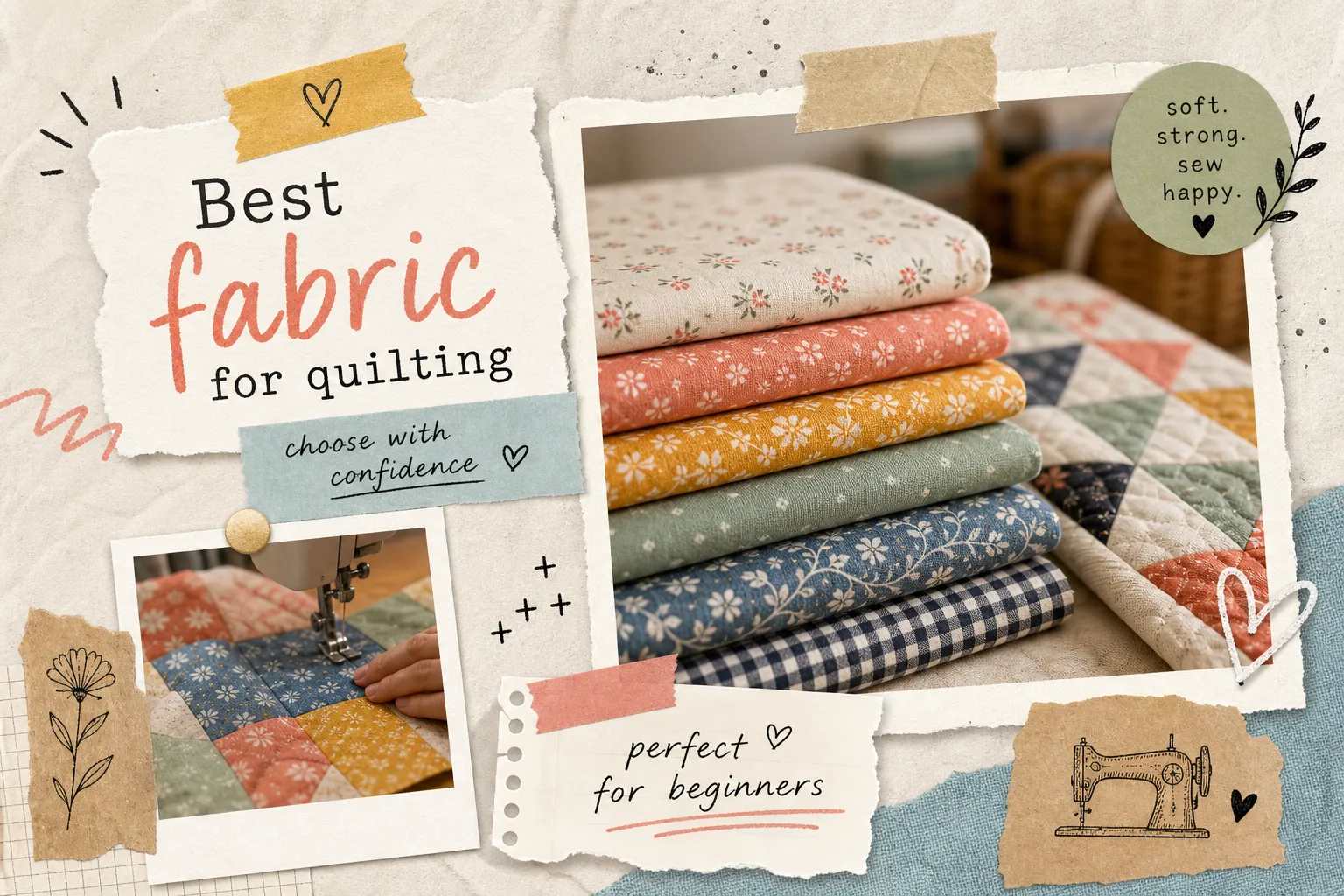
If you're wondering which is the best fabric for quilting, the answer for most beginners is straightforward: 100% quilting cotton. Most beginner quilt problems don't start at the sewing machine, they start at the fabric store, when you grab something that looks beautiful on the bolt without knowing whether it can be pieced accurately, hold up through multiple washes, or behave under the presser foot. Wrong fabric choice leads to distorted blocks, uneven seams, and quilts that pucker or bleed the first time they hit the laundry.
At The Fabric Unicorn, we field this question constantly from customers who are overwhelmed by options and just want to know what actually works. After years of curating quilting cottons and watching what performs in finished quilts versus what frustrates beginners into giving up, the answer is clear: there's a strong front-runner for most projects, with a short list of smart alternatives for specific situations.
This guide covers everything you need to make a confident fabric decision, from quilt top to backing, including which fabrics to skip entirely and where to find quality fabric that behaves the way you expect it to.
Why quilting cotton is the best fabric for quilting projects
What makes quilting cotton different from regular cotton
Not all cotton is the same, and this is where a lot of beginners get tripped up. Quilting cotton is a medium-weight, tightly woven, plain-weave fabric that sits in a different category from apparel cotton, muslin, or the craft cotton you find at most discount stores. Standard quilting cotton runs roughly 140, 160 GSM with a thread count in the range of 60, 75 threads per inch, which gives it a consistency and stability that other cottons simply don't have.
That tight, even weave is what makes quilter's cotton the workhorse of the quilt world. It cuts accurately, feeds evenly through the machine, and holds a pressed seam without distorting. When you're building a quilt top from dozens of small pieces, all of those properties matter every single time you pick up a pair of scissors or sit down at your machine.
How fabric weight and thread count affect your finished quilt
Lighter, loosely woven cotton frays more at the edges, shifts under the presser foot during piecing, and can let batting poke through the surface over time, a problem called bearding. On the other end, fabric that's too heavy becomes stiff and difficult to needle, especially for hand quilting, and adds unnecessary bulk at seam intersections. Medium-weight quilting cotton is the sweet spot because it holds its shape through repeated washings without becoming board-like or difficult to work with.
Premium designer quilting cottons from collections by makers like Tula Pink or Robert Kaufman tend to hit this weight range consistently, which is one reason experienced quilters seek them out by name rather than grabbing whatever is on sale. The fabric behaves predictably, and predictability is worth paying for when you've invested hours in cutting and piecing.
Flannel, linen, and canvas: when to reach for something different
Flannel: the cozy backup with real tradeoffs
Flannel is soft, warm, and genuinely useful for cold-weather quilts, but it asks more of you than standard quilting cotton. It's thicker and heavier, which means more bulk at seam intersections, and it has a slight tendency to stretch off-grain during cutting and piecing if you're not careful. It also shrinks more than standard quilting cotton on the first wash, so it's strongly recommended to prewash flannel before you cut a single piece.
Most experienced quilters use flannel on the backing rather than the top for exactly these reasons. As a backing material, flannel adds warmth and a soft hand without requiring the precision that a pieced top demands. If you want the warmth of flannel in a quilt, that's the smarter place to put it.
Linen and canvas: texture and character with a learning curve
Linen adds a relaxed, breathable quality and looks beautiful in minimalist or natural-palette quilts. The tradeoff is variability: linen can shrink unevenly, has a coarser texture that feels rough until broken in through washing, and requires more attention during pressing to lie flat. It can work in quilt tops, but it's a specialty choice rather than a beginner-friendly substitute for quilting cotton. Expect a steeper learning curve than you'd get with standard cotton.
Canvas sits even further from the quilting sweet spot. It's heavier and stiffer, and it's much better suited to structured bags or home décor projects than pieced quilt blocks. If you're building a quilt top, canvas will fight you at every seam. Save it for projects where that rigidity works in your favor.
Best fabric for quilting backing: choosing what goes behind the top
Cotton vs. flannel vs. minky: a practical comparison
Cotton backing is the easiest choice for most quilts. It's stable, easy to load on a longarm or pin flat for home machine quilting, and washes without special handling. If you're new to quilting or working with a longarm quilter for the first time, a cotton backing removes a layer of complexity from an already busy process.
Flannel backing adds warmth and a soft hand that works well for baby quilts or lap quilts meant for cold months. Always prewash flannel backing before assembly, it can shrink enough after the quilt is finished and bound to cause visible puckering. The extra bulk also means a slightly heavier quilt sandwich, which changes how you manage the layers during quilting.
Minky is the softest option and holds up well over time, but it's a polyester knit with real stretch. That stretch can cause shifting during quilting if not handled carefully, and dense, detailed quilting designs can disappear into the pile. Smooth minky is preferable over textured for backing because it lies flat under the needle and keeps quilting lines visible on the back of the finished quilt.
How backing choice changes how you quilt
Dense, detailed quilting designs show up best on a cotton or smooth minky backing. Flannel's nap can obscure stitching lines, so if you've invested in a complex quilting pattern, flannel backing will hide a lot of that work. If you mix backing fabrics, or combine a cotton top with a flannel backing, always prewash everything together. Cotton and flannel shrink at different rates, and mismatched shrinkage causes puckering or warping in the finished quilt after its first wash.
Prewashing quilting fabric: when it matters and when to skip it
The real case for prewashing
Quilting cotton typically shrinks 3, 5% on its first wash. Prewashing moves that shrinkage to before cutting, so your blocks stay accurate and the finished quilt doesn't pucker or warp after the first launder. It also reveals dye bleeding before the fabric is permanently sewn into a quilt top. Dark, saturated colors, red, navy, and deep purple especially, are the most likely to bleed, and finding that out after finishing a quilt top is an expensive way to learn the lesson.
The rule is simple: if you prewash one fabric in a project, prewash all of them. Fabrics that have been prewashed and fabrics that haven't will shrink at different rates after the quilt is finished, and the result is uneven texture across the surface. Consistent pre-treatment is the only way to control for consistent behavior.
When skipping prewash is the right call
Precut bundles should not be prewashed. Fat quarters handled carefully are borderline, but charm packs, jelly rolls, and other precuts will fray badly in the wash and distort in shape, leaving you with less usable fabric than you started with. The edges are precision-cut and won't survive a spin cycle intact.
Skipping prewash is also intentional when you want a slightly puckered, antique texture after the quilt's first wash. Letting the cotton shrink after quilting is complete creates a crinkled, vintage look that many quilters specifically want. If that's your goal, skip the prewash, finish the quilt, and let the first wash do the work.
Fabrics to avoid for piecing and machine quilting
Stretchy and slippery fabrics cause the most problems
Minky, satin, and knit fabrics shift during piecing and machine quilting because they lack the weave stability of quilting cotton. This leads to uneven seams, puckered blocks, and misaligned points no matter how carefully you pin. If you do attempt knits, a walking foot helps manage the stretch, but for a beginner, it's one more variable to manage when you're still building core skills. Loosely woven or very lightweight fabrics fray aggressively and distort off-grain, which makes accurate cutting close to impossible before you've even touched the sewing machine.
Heavy and textured fabrics create bulk and visible needle damage
Velvet, corduroy, and heavy canvas are too bulky for standard quilt seam allowances. Seamed units come out smaller than planned, and block intersections become stiff mounds of layered fabric that are hard to press flat and harder to quilt through. Tightly woven specialty fabrics, including some digitally printed substrates, can show thread runs where the needle disturbs the weave, particularly noticeable close to seam lines.
Polyester quilting fabric deserves a specific mention because it's sometimes marketed as a budget alternative to quilting cotton. It's less breathable, pills over time with repeated washing, and is harder to press flat cleanly because polyester doesn't respond to heat the way cotton does. For quilt tops, stick with 100% cotton. The performance difference shows clearly in the finished quilt.
Where to buy quilting fabric without the overwhelm
Why curated shops outperform big-box stores for quilting cotton
Big-box craft stores stock a wide range of fabric, but quilting cotton quality varies significantly by brand and collection within the same store. A lower-quality cotton at a similar price per yard can fray more, bleed in the wash, or feel thin and stiff after laundering. Price per yard stops being the relevant metric when the fabric doesn't perform through the life of the quilt.
Curated online shops specialize in quilting fabric and typically carry vetted designer collections, so the baseline quality is higher and the selection is edited rather than overwhelming. You're not sorting through hundreds of unrelated fabrics to find three that might work together. That curation does the heavy lifting for you, which matters a lot when you're still learning what good quilting cotton looks and feels like.
What to look for when shopping online for quilting fabric
Cut-to-order by the inch matters if you need an exact amount for a specific block count. Fixed yardage increments often leave you buying more than you need or coming up short on a key print. Look for shops that cut to order, carry recognized designer collections, and let you browse by color, that kind of organization makes coordinating fabrics much faster than scrolling through thousands of unrelated prints. For beginners especially, thoughtful curation removes the decision fatigue that makes choosing the right quilting fabric feel harder than it needs to be.
- Look for shops that clearly state fabric content and weight so you know what you're ordering
- Check whether fabric is cut to order or sold in fixed increments only
- Prioritize shops with a clearance or last-chance section if you're building a stash on a budget
- Shop from retailers who carry recognizable designer collections, since established fabric lines hold to consistent quality standards
Frequently asked questions about quilting fabric
Is quilting cotton washable?
Yes. Quilting cotton is machine washable and holds up well over repeated washes, which is one reason it's the go-to choice for most quilts. Prewash your yardage before cutting to account for the initial 3, 5% shrinkage, and use a gentle cycle with cold water to preserve colors.
Can I mix cotton and flannel in the same quilt?
You can, but always prewash both fabrics before cutting. Cotton and flannel shrink at different rates, so if one has been prewashed and the other hasn't, the finished quilt will pucker unevenly after its first wash. Consistent pre-treatment across all fabrics in a project keeps everything behaving the same way.
What GSM is best for quilting?
Standard quilting cotton typically falls in the 140, 160 GSM range. This weight is stable enough to hold seams cleanly without adding unnecessary bulk at intersections, and it's light enough for comfortable hand and machine quilting. Fabrics below this range tend to fray and distort; fabrics above it can become stiff and difficult to needle through multiple layers.
The short answer, and what to do next
For most quilting projects, the best fabric for quilting is 100% quilting cotton for the top. It cuts accurately, pieces cleanly, and wears well over years of use. Flannel and minky have their place on the backing when warmth and softness are the priority. Linen works for specific aesthetics but demands more patience from the sewist. When in doubt, prewash everything except precuts.
Knowing which fabric to use is half the work. The other half is finding fabric that performs consistently from cut to finished quilt. A smaller, curated selection from a shop you trust is worth more than a cart full of unknowns, and the time you save not troubleshooting fabric problems is time you can spend actually quilting.
When you're ready to shop, browse The Fabric Unicorn's quilting cotton collection to find the best fabric for your quilting project, curated designer selections, clearly labeled by content and color, so you can build your project with confidence.


